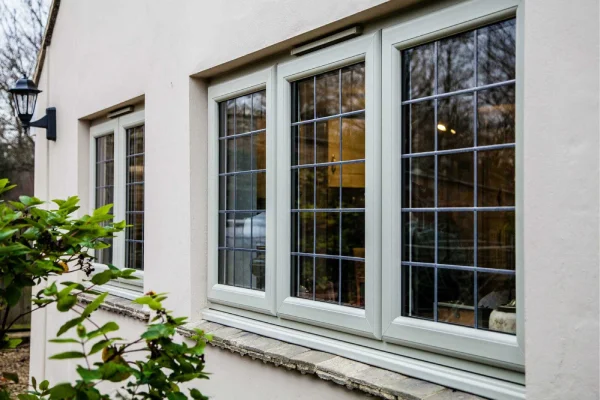
Casement Profile Door
A hinged leaf compressing onto its gasket when shut. The profile carries a continuous gasket groove on all four sides, which is what gives this type its sealing advantage.
A profile door is only as good as the section behind it. This page covers what a system profile actually contains, how the door types differ, and what separates a profile built to last from a section chosen on rate alone.
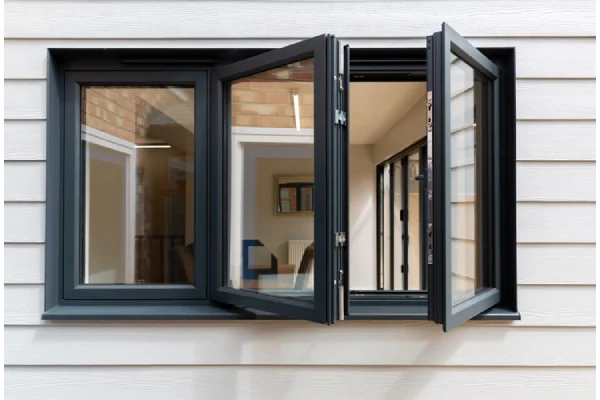
An aluminium profile door is a door built from extruded aluminium sections rather than timber, steel or uPVC. In a proper system those sections are a matched family: the frame, the shutter, the beads and the gaskets are all drawn to fit each other, with grooves, drainage channels and screw ports already formed into the metal.
That distinction matters more than the material does. A door assembled from loose sections can look identical on day one and behave very differently by year three, because sealing, drainage and hardware fixing were improvised rather than designed in.
For a measured quotation, call +91-9312500138 or email info@alurac.in.
Look at the end of a good door section and it is busier than people expect. There is a groove sized for a specific gasket, a port positioned for a specific screw, a channel that carries water back out of the frame, and an interlock shaped to meet the matching section on the next leaf.
None of that exists by accident, and none of it can be added later. A section without a proper gasket groove gets silicone instead. A section without drainage holds water in its rebate. A section without screw ports gets hardware fixed into whatever face is handy, which is the fixing that works loose first.
Seven configurations built from profile systems, each suited to a different opening.
A hinged leaf compressing onto its gasket when shut. The profile carries a continuous gasket groove on all four sides, which is what gives this type its sealing advantage.
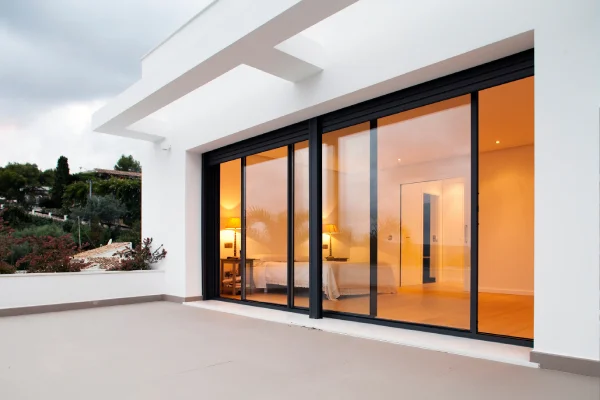
Leaves running on rollers in a tracked frame section. The track profile and its drainage decide how smoothly the door runs years after installation.
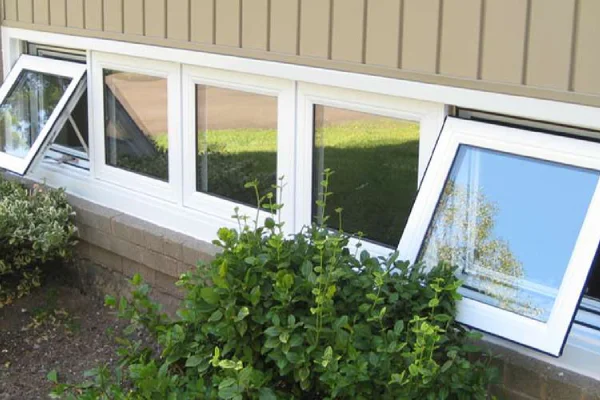
A section carrying dual-action gearing inside the leaf, so one handle gives both a tilted and a fully open position.
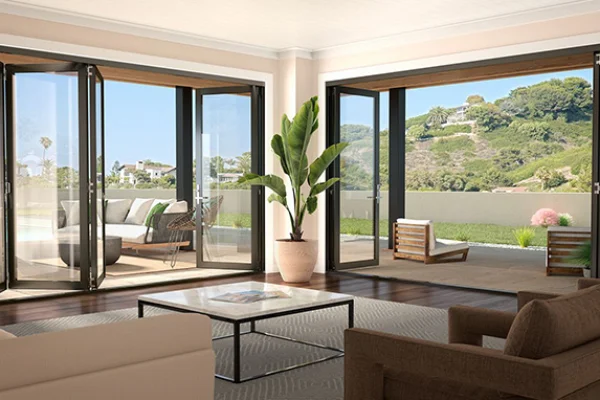
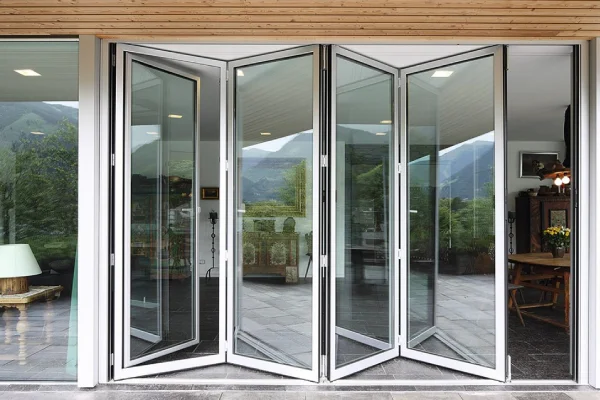
Multiple leaves with hinge and running gear ports formed into each section, so the set folds and stacks without hardware fouling the frame.
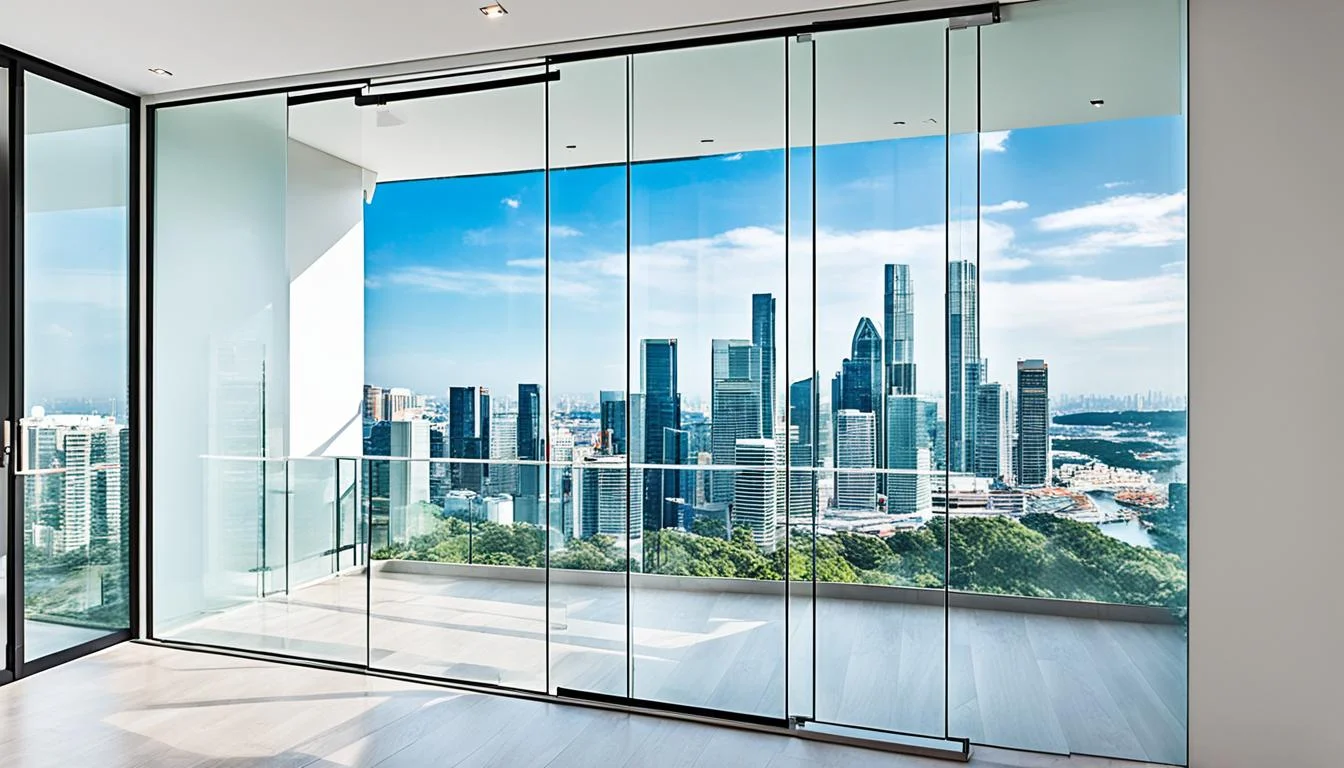
Narrow visible face with the strength carried in section depth behind the glass, giving a thin frame line without a weak frame.
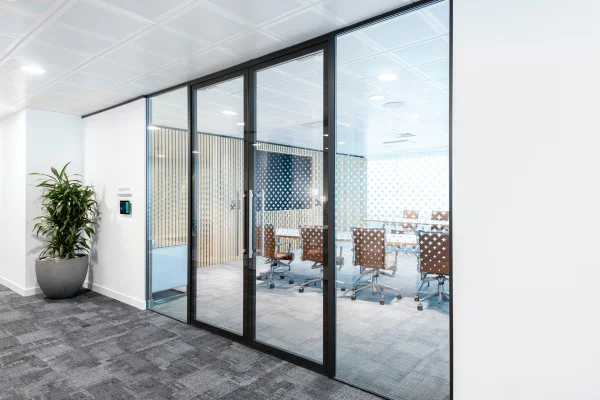
Interior leaves in minimal sections for cabins, studies and bathrooms, where the door should read as part of the wall rather than an object in it.
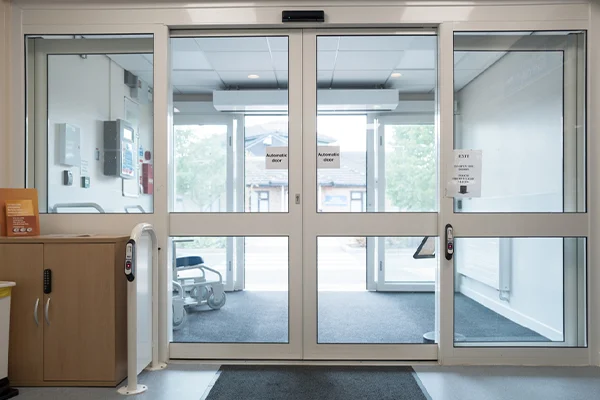
Track beam and carrier sections machined for the drive unit and sensors, so the mechanism runs against a frame that is genuinely true.
Six things worth confirming in writing before an order is placed.
The amount of aluminium in the section. Quietly reducing it is the easiest way to beat a rate, and nothing on the finished door shows it.
Confirm the gasket is the one the groove was drawn for. A gasket that almost fits is a gasket that lets air and dust past at the corners.
Water will get into any frame rebate. What matters is whether the section is designed to carry it back out, and whether those paths stay clear.
An insulating barrier through the section slows heat passing through the frame. Worth specifying on air conditioned and heavily glazed rooms.
Hardware should fix into ports the section already carries. Anything screwed into a convenient face instead is the fixing that works loose first.
Finish is applied before fabrication, so check it runs evenly along the full length rather than varying between bundles.
Four conditions the section has to deal with, year after year.
Aluminium does not swell, rot or absorb water, so the leaf keeps meeting its frame through every wet season.
The section stays dimensionally stable, and a thermal break limits how much heat the frame itself passes into the room.
Continuous gaskets and working drainage are what actually keep road dust and monsoon rain outside the opening.
An aluminium section offers nothing for termites, which removes a failure mode that timber door frames never escape.
The same process whether it is one door or every opening in a building.
 01
Call, WhatsApp or send an enquiry and we schedule a convenient slot.
 02
Openings are measured on site and your priorities are noted.
 03
System, glass, finish and hardware are proposed with an itemised quotation.
 04
Made to the measured opening, then fitted, sealed and finished by our own team.
 05
See and operate the systems in person at our Ghaziabad experience centre.
What buyers, architects and fabricators ask most about door sections.
An aluminium profile door is a door built from extruded aluminium sections rather than timber, steel or uPVC. In a proper system, those sections are designed as a matched family: the frame, the shutter, the beads and the gaskets all made to fit each other, with grooves, drainage channels and screw ports already formed into the section.
A system profile is drawn as part of a set. Its gasket grooves, screw ports, drainage paths and interlocks line up with the beads, shutters and hardware made to go with it. An ordinary section is just aluminium in a shape. It can be assembled into a door, but the sealing, drainage and hardware fixing all become improvisation.
Casement, sliding, tilt and turn, slide and fold, lift and slide, slim openable and automatic door leaves are all built from profile systems. The choice depends on the opening width, whether there is swing space and how much of the opening needs to clear.
Wall thickness is the amount of aluminium in the section. Too little and the frame flexes under the weight of its glass, so the shutter stops meeting its gasket evenly. It is also the easiest thing for a supplier to reduce quietly, because nothing on a finished door reveals it.
A thermal break profile has an insulating barrier running through the section, separating the inner face from the outer one. It slows heat passing through the frame itself, which matters on air conditioned rooms and heavily glazed elevations where the frame would otherwise conduct heat straight through.
In a system, yes. Handles, hinges, friction stays, rollers and multi-point locking are specified to suit the profile family, so they fix into the ports the section already carries rather than being screwed into whatever surface is available.
Yes. Sections are cut and assembled to the measured opening rather than bought as finished stock units, so an existing opening does not have to be altered to receive the door.
Powder coating in a wide colour range, anodising in natural and tinted shades, and matte, glossy and wood-grain effects. The finish is applied to the section before fabrication, which is why coating consistency along the length matters.
Ask for the wall thickness in writing, sight along a length for straightness and twist, check the coating is even across the whole section, and confirm that the gaskets, beads and hardware belong to the same system. A rate well below the market usually reflects one of those four.
Yes. Aluminium does not swell in the monsoon, warp in summer heat or carry termite risk, and powder coated surfaces resist fading. What matters most is that the profile carries proper gasket grooves and working drainage, since those are what keep dust and driven rain outside.
Share your opening sizes, drawings or a few site photos. We will recommend the system, glass and hardware, then share a quotation with the section specification stated.
The systems and sections behind these doors.