Aluminium Lift & Slide Doors
A geared handle lifts the whole leaf clear of its seals before it moves, so a large heavy pane glides with little effort and then lowers back onto its gaskets to seal under compression. Supplied and fitted by Alurac.
- Large Pane Capability
- Compression Gasket Sealing
- Flush Threshold Option
- Free Site Measurement
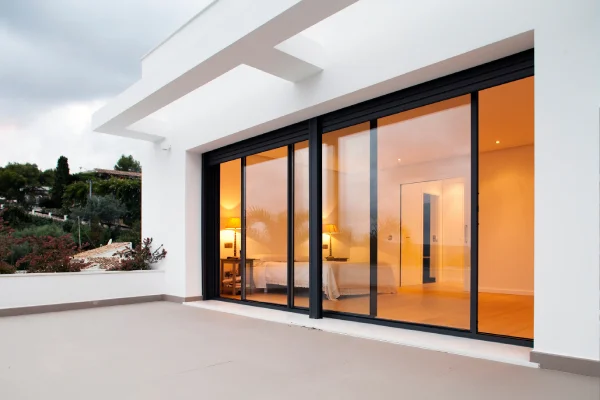
What Is an Aluminium Lift Slide Door?
An aluminium lift slide door is a sliding system in which turning the handle first lifts the entire leaf clear of its seals, and only then allows it to roll sideways. Returning the handle lowers the leaf back down so it compresses its gaskets along the full length rather than brushing past them.
That single change is what lets an aluminium lift slide door carry much larger panes than a conventional slider while still opening easily, and seal far more tightly when shut. Alurac supplies lift and slide systems with flush or low profile thresholds, toughened, laminated or double glazed panes, and powder-coated, anodised or wood finishes. To discuss an opening, call +91-9312500138 or email info@alurac.in.
How a Lift and Slide Door Works
Four stages, and the reason the system behaves differently from every other slider.
1. Turn the Handle
A half turn of the handle drives the gearing inside the leaf. Nothing has moved sideways yet, which is what separates this from a conventional slider.
2. The Leaf Lifts
The gearing raises the whole leaf clear of its seals and onto its rollers. The weight transfers off the gaskets and onto the running gear.
3. It Glides
With the seals released, even a large and heavy leaf moves with very little effort, because it is rolling rather than dragging.
4. It Lowers and Seals
Returning the handle lowers the leaf back down onto its gaskets, compressing them along the full length rather than just brushing against them.
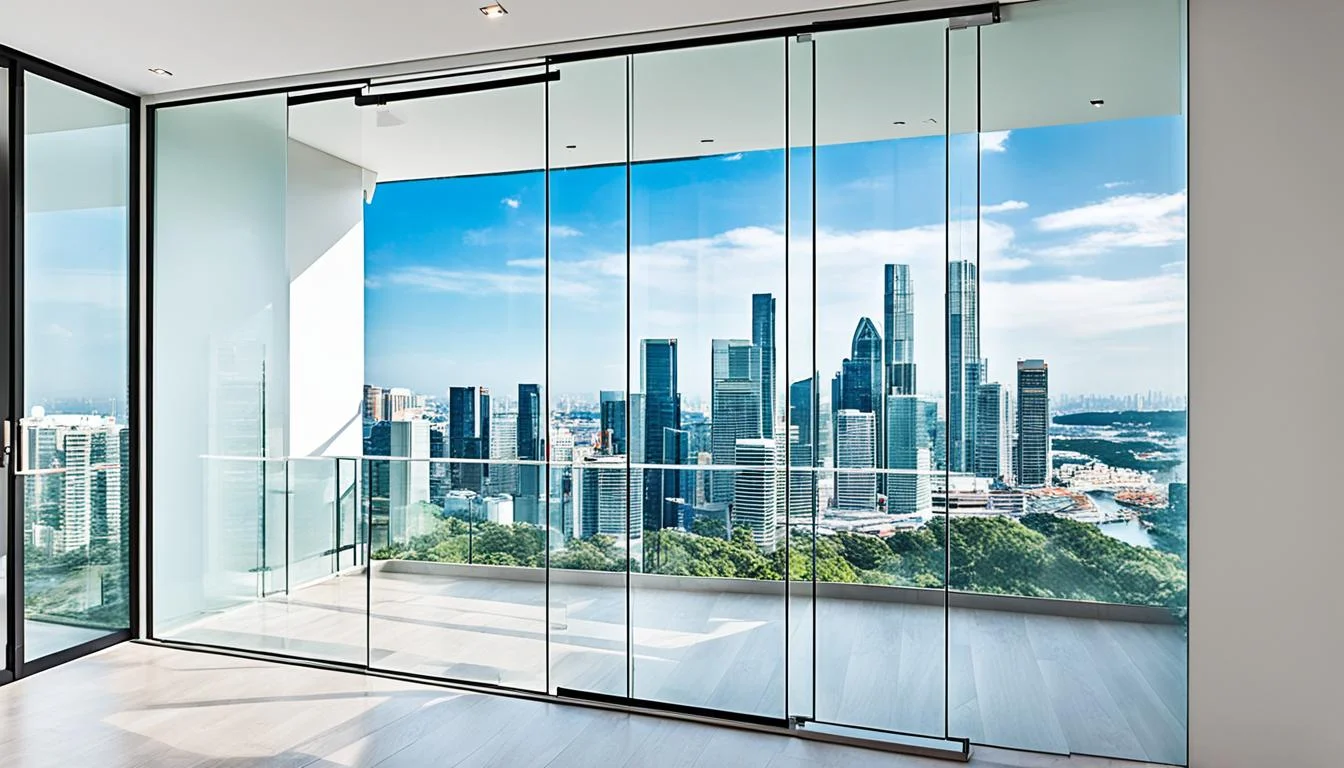
Why Lifting the Leaf Changes Everything
A conventional sliding door has a problem it can never fully solve. The leaf has to move along its seals, so those seals must stay light enough to slide against. Light seals mean a limit on how well the door can keep out dust, rain and noise when it is closed, and a limit on how heavy a leaf is sensible to push.
Lifting the leaf removes that compromise. Because the seals are released before any sideways movement, they can be full compression gaskets rather than brushes. The door seals like a casement when shut and rolls like a slider when open, which is why large glazed openings so often end up on this system.
- Compression gaskets instead of brush seals, for a tighter closed position.
- Large heavy panes that still move with modest effort.
- Flush threshold options where the floor line should run through.
- Gaskets that are not dragged across every time the door opens.
- A locking position that holds the leaf down into its seals.
Lift and Slide vs Sliding vs Slide and Fold
Three ways to open a wide glazed span, and what each one is actually good at.
| Consideration | Lift and Slide | Standard Sliding | Slide and Fold |
|---|---|---|---|
| How the leaf moves | Lifts clear of its seals, then rolls | Slides along brush seals at all times | Folds and stacks to one side |
| Sealing when closed | Compressed onto gaskets along the leaf | Brush seals, lighter contact | Gasket sealing at each leaf and hinge |
| Panel size it suits | Large and heavy panes | Light to moderate panes | Multiple moderate panes |
| Effort to operate | Low despite the weight, because of the gearing | Low on light leaves, rises with weight | Moderate, each leaf handled in turn |
| Opening cleared | Part of the span, as leaves pass each other | Part of the span | Almost the whole span |
| Threshold options | Flush or low profile available | Usually a raised track | Flush or low profile available |
| Relative cost position | Premium | Most economical | Above standard sliding |
General guidance. The right system depends on the span, how much of the opening needs to clear and how the door will be used day to day.
Thresholds and Accessibility
The threshold decides how the door looks at floor level and how water leaves the opening.
Flush and Level
The floor runs through uninterrupted from inside to outside. The best looking option and the most demanding on drainage, so it is detailed deliberately.
Low Profile
A small upstand that is easy to step over while giving water a more straightforward path away from the opening.
Accessible Use
A level threshold removes the step for wheelchairs, walking frames and prams, which is why it is specified in homes planning for ageing in place.
Drainage Detail
Whichever threshold is chosen, where the water goes is agreed before installation rather than discovered during the first monsoon.
Where an Aluminium Lift Slide Door Suits Best
Six situations where the mechanism earns its premium.
Garden and Deck Openings
Large panes framing a lawn or deck, where the door should look like glass rather than frame and still seal tightly when shut.
Apartments and Penthouses
Upper floor terraces where wind load is higher and a securely sealed leaf matters more than it does at ground level.
Hotels and Resorts
Guest room terrace doors that have to operate easily for every guest and seal against noise when closed.
Restaurants and Cafes
Frontages opened across a season, where staff operate heavy leaves daily and effort matters.
Accessible Homes
Level threshold arrangements that remove the step entirely for wheelchair and walking frame users.
Noise Exposed Elevations
Openings facing a road or a busy courtyard, where the compression seal and a double glazed unit work together.
From Enquiry to Fitted Door in Five Steps
The same process whether it is a single terrace opening or every glazed span in a building.
 01
Book a Consultation
Call, WhatsApp or send an enquiry and we schedule a convenient slot.
 02
Share Your Opening
Openings are measured on site and your priorities are noted.
 03
Specification & Quote
System, glass, finish and hardware are proposed with an itemised quotation.
 04
Fabrication & Fitting
Made to the measured opening, then fitted, sealed and finished by our own team.
 05
Showroom Visit
See and operate the systems in person at our Ghaziabad experience centre.
Aluminium Lift and Slide Doors: FAQs
What homeowners, architects and builders ask most before specifying.
What is an aluminium lift slide door?
An aluminium lift slide door is a sliding system where turning the handle first lifts the whole leaf clear of its seals before it moves. Once open it rolls on its running gear, and returning the handle lowers it back onto its gaskets so the leaf is compressed into them rather than resting lightly against them.
How is it different from a normal sliding door?
A conventional slider drags along brush seals whenever it moves, which limits both how tightly it can seal and how heavy a leaf it can carry comfortably. A lift and slide releases those seals before moving, so it can use a full compression gasket and carry much larger panes while still being easy to operate.
Is the door hard to operate?
No. The gearing does the work, which is the point of the mechanism. A large and heavy leaf that would be difficult to push on a conventional track moves easily once it has been lifted clear of its seals.
How large can a lift and slide panel be?
Larger than a conventional slider can comfortably manage, which is the usual reason for choosing one. The limit depends on the system, the glass build and the hardware specified, and it is confirmed against the opening before the order is placed.
Does it seal better than a normal slider?
Generally yes, because the leaf lowers onto its gaskets and compresses them along its length instead of brushing past them. That compression is what improves resistance to dust, driven rain and noise when the door is closed.
Can these doors have a flush threshold?
Yes. Flush and low profile thresholds are both available, and the level option is often chosen where a room and a terrace should read as one space, or where wheelchair and walking frame access matters. Drainage is detailed deliberately in either case.
Are these doors suitable for Indian weather?
Yes. The compression seal handles monsoon driven rain and road dust better than a brush sealed slider, and aluminium itself does not swell or warp through the seasonal range. Glass can be specified for heat gain on west-facing elevations.
Where are these doors usually installed?
Garden and deck openings, apartment and penthouse terraces, hotel guest rooms, restaurant frontages and accessible homes. They suit any opening where the panes are large, the door is used often and the seal when closed matters.
Are these doors expensive?
They sit at a premium against standard sliding systems, because the geared mechanism, the heavier running gear and the larger glass all cost more. The return is a door that seals properly and still operates easily at a size a normal slider would struggle with.
What maintenance do these doors need?
Keep the track and drainage clear of dust, wipe the frame with a mild soap solution, and have the gearing, rollers and gaskets checked once a year. The mechanism is the part worth including in that annual check.
Planning a Large Glazed Opening?
Share your opening span, drawings or a few site photos. We will confirm what the opening can carry, recommend the glass and threshold detail, then share an itemised quotation.
Related Pages
Related sliding and glazed systems.